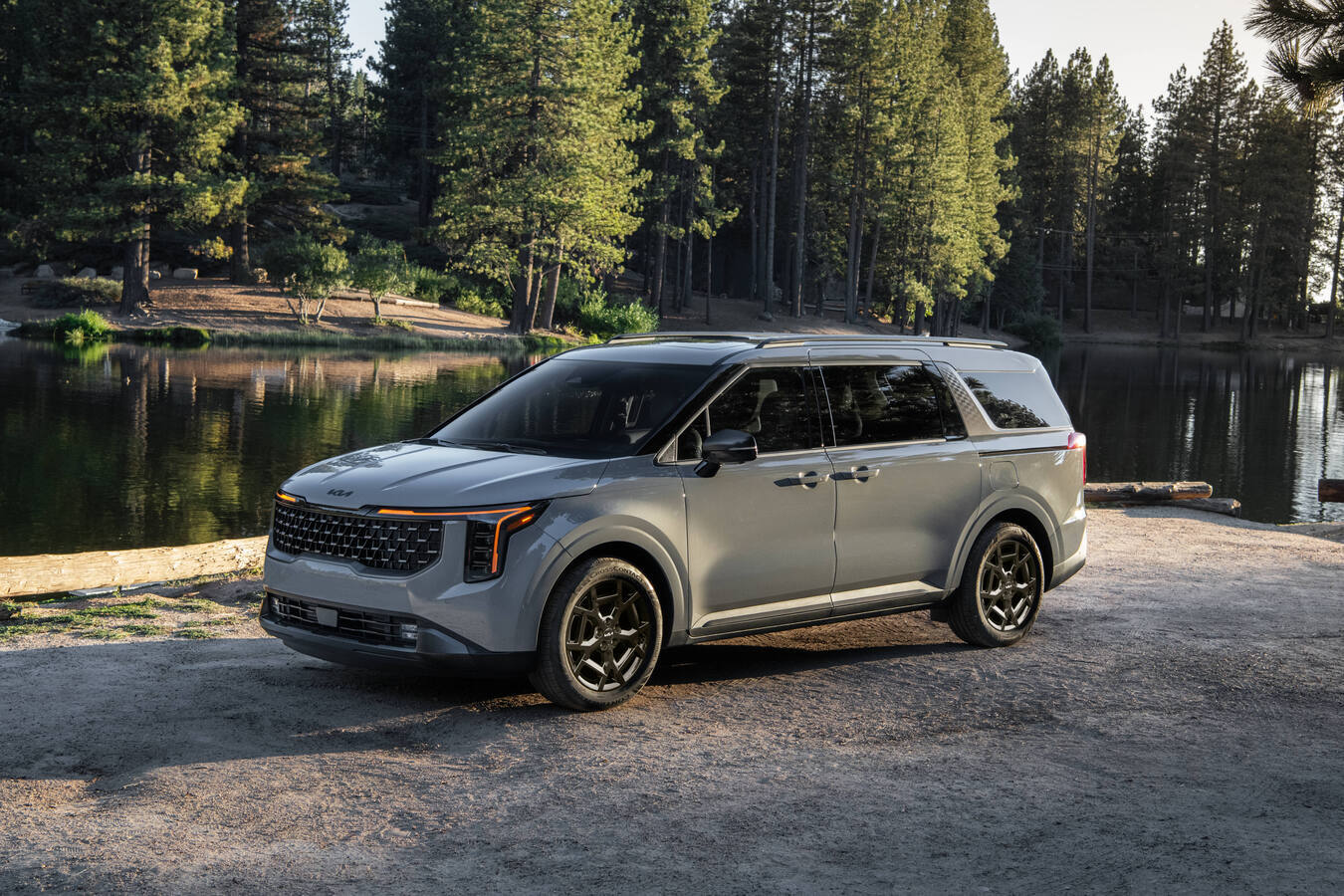
2026 Kia Carnival Hybrid vs Toyota Sienna: The Second-Row Seat Dilemma Buyers Regret
For years, the formula for American family hauling was simple: if you wanted exceptional gas mileage with dual sliding doors, you bought a Toyota Sienna. If you wanted crisp SUV-like styling and class-leading passenger volume, you bought a gas V6 Kia Carnival and accepted 22 mpg at the pump.
With the arrival of the 2026 Kia Carnival Hybrid, that compromise no longer exists.
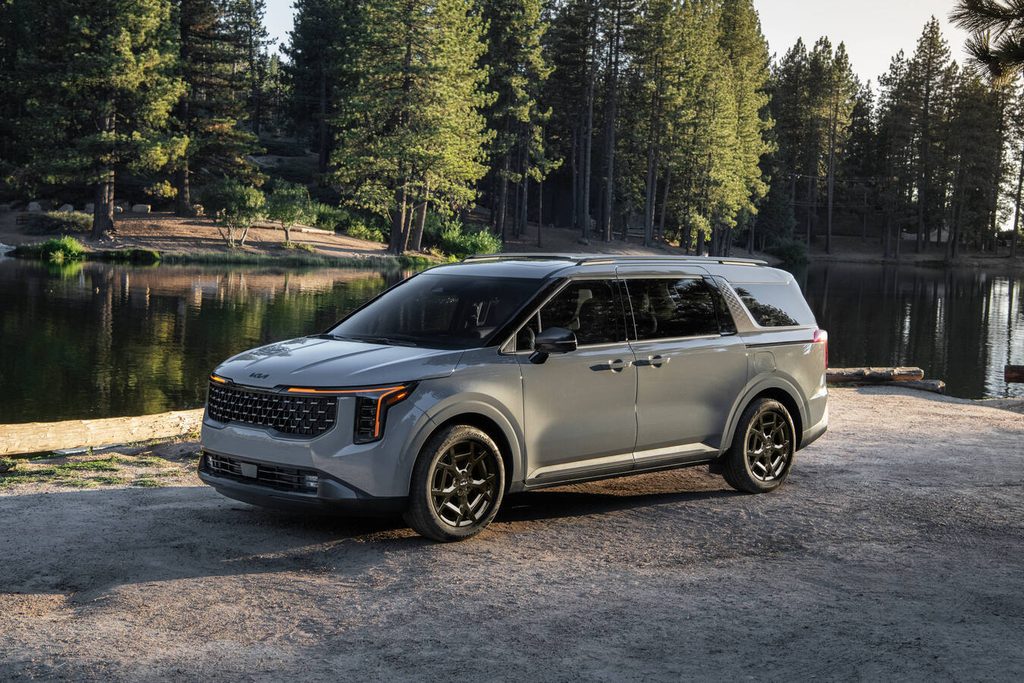
Kia didn’t just drop an electric motor into its multi-purpose vehicle (MPV); they took a radically different engineering approach than Toyota. Where the Sienna relies on a naturally aspirated four-cylinder paired with an electronic continuously variable transmission (e-CVT), Kia paired a 1.6-liter turbocharged engine with a permanent-magnet motor and a conventional hydraulic 6-speed stepped automatic transmission.
If you are cross-shopping these two family haulers for 2026, brochure claims only tell half the story. Here is the verified, real-world buying breakdown covering driving dynamics, cargo packaging, true towing ratings, and the critical AWD dilemma.
Key Specs Comparison: Verified OEM Data
| Feature | 2026 Kia Carnival Hybrid | 2026 Toyota Sienna Hybrid |
|---|---|---|
| Powertrain | 1.6L Turbocharged Inline-4 + Electric Motor | 2.5L Naturally Aspirated Inline-4 + Dual Motors |
| Combined System Output | 242 hp / 271 lb-ft torque | 245 hp / 176 lb-ft engine torque |
| Transmission | 6-Speed Automatic (AT) | Electronic CVT (e-CVT) |
| Drivetrain | Front-Wheel Drive (FWD) only | FWD standard; Electronic On-Demand AWD available |
| EPA Fuel Economy (City/Hwy/Comb) | 34 / 31 / 33 MPG | 36 / 36 / 36 MPG (FWD) / 35 / 36 / 35 MPG (AWD) |
| Max Towing Capacity | 2,500 lbs (with trailer brakes) | 3,500 lbs (with trailer brakes) |
| Cargo Behind 3rd Row | 40.2 cu. ft. | 33.5 cu. ft. |
| Max Cargo Volume | 145.1 cu. ft. (2nd row removed) | 101.0 cu. ft. (2nd row folded forward) |
| Powertrain Warranty | 10-year / 100,000-mile | 5-year / 60,000-mile (Hybrid system: 8-yr/100k) |
1. Powertrain & Driving Feel: Turbo 6-Speed vs. e-CVT Drone
The single biggest operational difference between these two vans reveals itself within 500 feet of entering an interstate highway on-ramp.
- Toyota Sienna: The 2.5-liter Dynamic Force hybrid powertrain is renowned for bulletproof long-term durability and efficiency. However, under heavy acceleration or uphill climbs with a full family aboard, the e-CVT holds the engine at high RPMs. That familiar CVT “engine drone” is noticeable inside the cabin.
- Kia Carnival Hybrid: By utilizing an actual hydraulic 6-speed stepped automatic, the Carnival drives like a conventional combustion crossover. Gear shifts are distinct, power delivery is predictable, and low-end torque is substantially punchier thanks to the turbocharger (271 lb-ft of combined torque vs. Sienna’s 176 lb-ft engine torque). It feels quieter and more composed during highway passing maneuvers.
2. The Big Trade-Off: All-Wheel Drive (AWD)
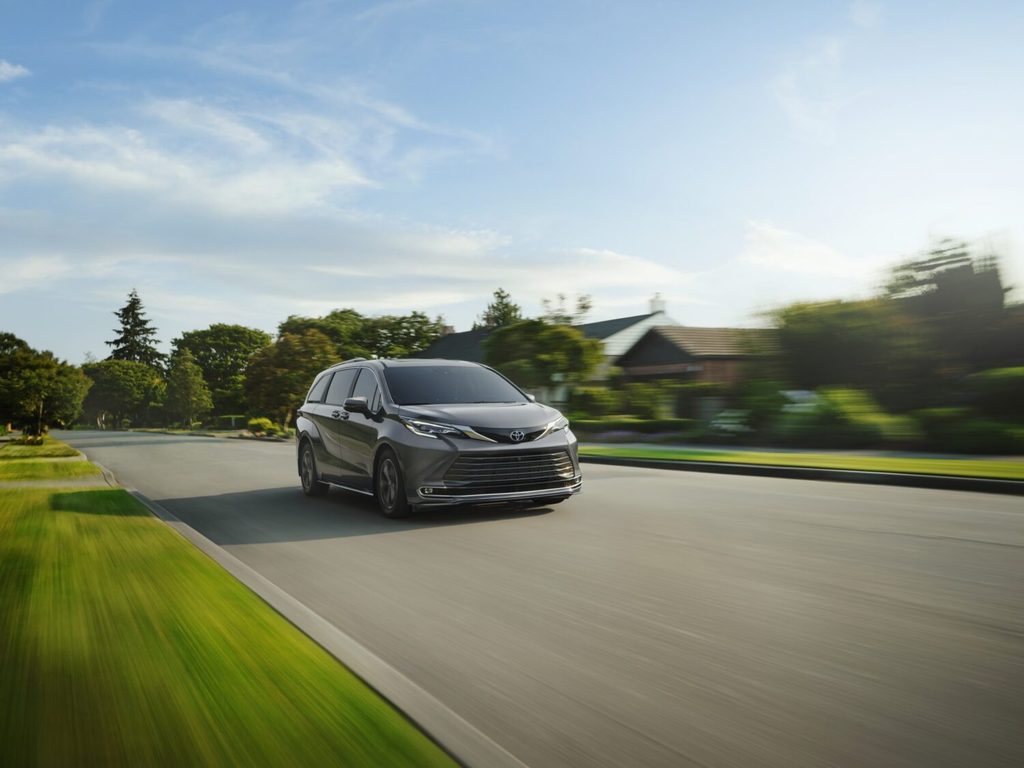
This is the non-negotiable divider for northern US, Canadian, and mountainous-region shoppers.
- Toyota Sienna offers Electronic On-Demand AWD across all trims (standard on Woodland Edition). It uses an independent electric motor on the rear axle that engages instantly whenever front traction loss is detected.
- Kia Carnival Hybrid is Front-Wheel Drive (FWD) ONLY. Because the high-voltage hybrid battery pack is packaging-optimized under the floorboards and the rear subframe on this hybrid setup does not accommodate an electric rear differential, AWD is unavailable on the HEV model.
Buyer’s Tip: If you live in an area with steep unpaved mountain roads and heavy unplowed snow, the Sienna AWD provides immediate out-of-the-box traction. However, for suburban winter conditions, outfitting a FWD Carnival with a dedicated set of certified winter tires (such as Michelin X-Ice or Bridgestone Blizzak) often outperforms all-season tires on an AWD vehicle on packed snow and ice.
3. Cargo Volume & Second-Row Flexibility
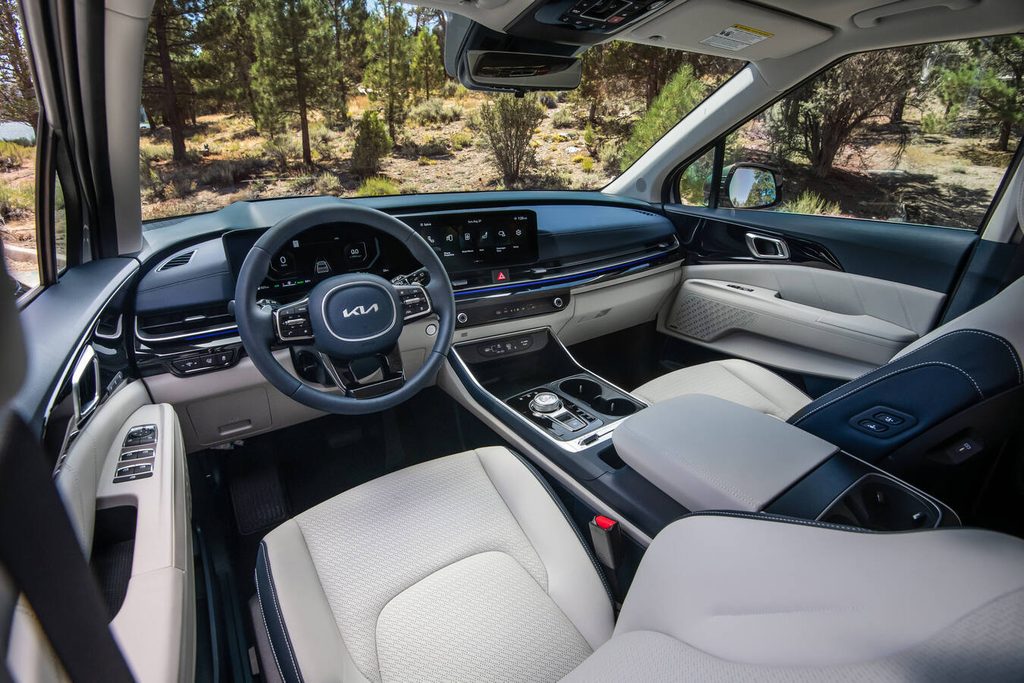
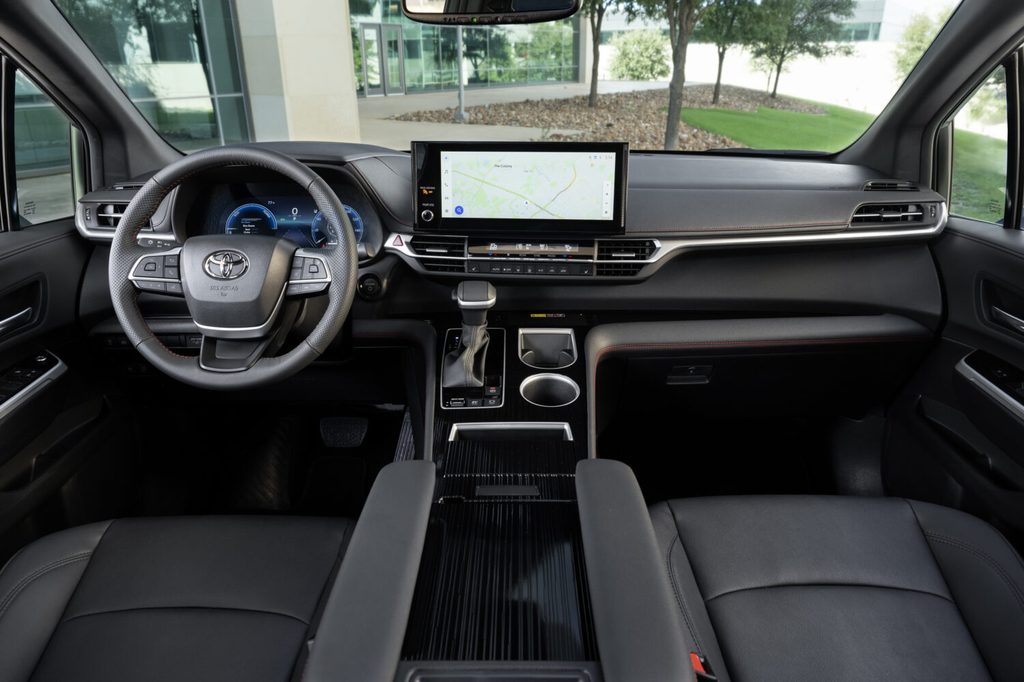
Both vehicles handle family road trips with ease, but their interior philosophies diverge sharply.
- Second-Row Versatility:
- The Sienna’s “Super Long Slide” seats provide up to 25 inches of fore-aft travel, offering limousine-like legroom. However, the second-row seats cannot be removed due to integrated seat-mounted side airbags. Maximum cargo utility is permanently capped at 101 cubic feet.
- The Carnival offers two configurations depending on trim. In 8-passenger layouts, the second-row seats are completely removable, and the center seat slides forward toward the front row. On top SX Prestige trims, optional “VIP Lounge Seats” feature power ottomans, heating, and ventilation. Behind the third row, the Carnival delivers a class-leading 40.2 cu. ft. of luggage space—nearly 7 cu. ft. more than the Sienna.
- Cabin Technology:
- Kia features a dual 12.3-inch curved panoramic display running modern ccNC software with wireless Apple CarPlay and Android Auto.
- While Toyota offers an available 12.3-inch display on higher Sienna trims, lower grades retain smaller screens and a more utilitarian cabin aesthetic.
4. Ownership Costs, Towing, and Warranty
- Fuel Economy: The Sienna delivers approximately 3 to 4 more combined MPG than the Carnival Hybrid (36 MPG vs. 33 MPG). Over 15,000 miles per year at $3.50/gal, the Sienna saves around $150 to $200 annually.
- True Towing Limits: If you plan to pull campers, pay close attention. The Toyota Sienna Hybrid is rated to tow up to 3,500 lbs with trailer brakes. The 2026 Kia Carnival Hybrid is rated at 2,500 lbs (down 1,000 lbs from the gas V6 Carnival’s 3,500-lb limit due to hybrid cooling thresholds).
- Factory Warranty:
- Kia: 5-year/60,000-mile limited basic warranty, and a 10-year/100,000-mile powertrain & hybrid component warranty.
- Toyota: 3-year/36,000-mile basic, 5-year/60,000-mile powertrain, and 8-year/100,000-mile hybrid components (10-yr/150k on the traction battery).
The Verdict: Which One Should You Buy?
- Buy the Toyota Sienna if:
- You require factory AWD for winter commuting.
- Maximum fuel economy (up to 36 MPG combined) and long-term resale reliability are your absolute top priorities.
- You need the full 3,500-lb towing capacity and do not plan to remove the second-row seats.
- Buy the Kia Carnival Hybrid if:
- You prefer the refined, quiet acceleration of a turbocharged engine paired with a 6-speed stepped automatic over CVT drone.
- You want modern SUV exterior styling, dual 12.3-inch panoramic screens, and premium VIP lounge seating.
- You need maximum cargo versatility (40.2 cu. ft. behind row 3, 145.1 cu. ft. max) and 10 years of factory powertrain warranty protection.
Frequently Asked Questions (FAQ)
Q1: Does the 2026 Kia Carnival Hybrid require premium gasoline?
No. Despite having a 1.6-liter turbocharged engine, Kia engineers calibrated the Smartstream powertrain to run on regular 87-octane unleaded fuel.
Q2: What is the towing capacity difference between the Carnival Hybrid and Sienna?
The Toyota Sienna Hybrid is rated to tow up to 3,500 lbs with trailer brakes. The 2026 Kia Carnival Hybrid is rated at 2,500 lbs (with trailer brakes, or 1,000 lbs without). If towing pop-up campers over 2,500 lbs, the Sienna offers the necessary margin.
Q3: Can the Carnival Hybrid drive on pure electricity?
The Carnival Hybrid is a conventional parallel hybrid (HEV), not a plug-in hybrid (PHEV). It automatically switches between electric motor and gas engine power based on driving conditions, but it cannot be plugged in and does not support extended electric-only highway cruising.